
Every hospital, clinic, and healthcare network faces the same challenge: delivering exceptional patient care while managing increasingly complex business operations. Finance, procurement, inventory, compliance, and reporting all need to work together, yet many organizations still rely on disconnected systems that slow decisions and increase administrative effort.
According to Deloitte’s 2025 Global Health Care Outlook, health systems are increasingly investing in digital technologies to improve operational efficiency, productivity, and patient outcomes.
Finance teams often work in one system, procurement in another, inventory is managed separately, and reporting depends on spreadsheets or manual consolidation. As organizations expand across multiple facilities and locations, these disconnected processes create delays, duplicate work, and make it difficult to get a clear picture of what’s happening across the business.
This is where healthcare transformation is changing. While clinical innovation continues to advance, there’s an equally important shift happening behind the scenes. Healthcare providers are investing in modern business platforms that connect operations, improve visibility, and help teams work more efficiently. The goal isn’t simply to digitize existing processes. It’s to create an organization where finance, procurement, inventory, operations, and data work together seamlessly.
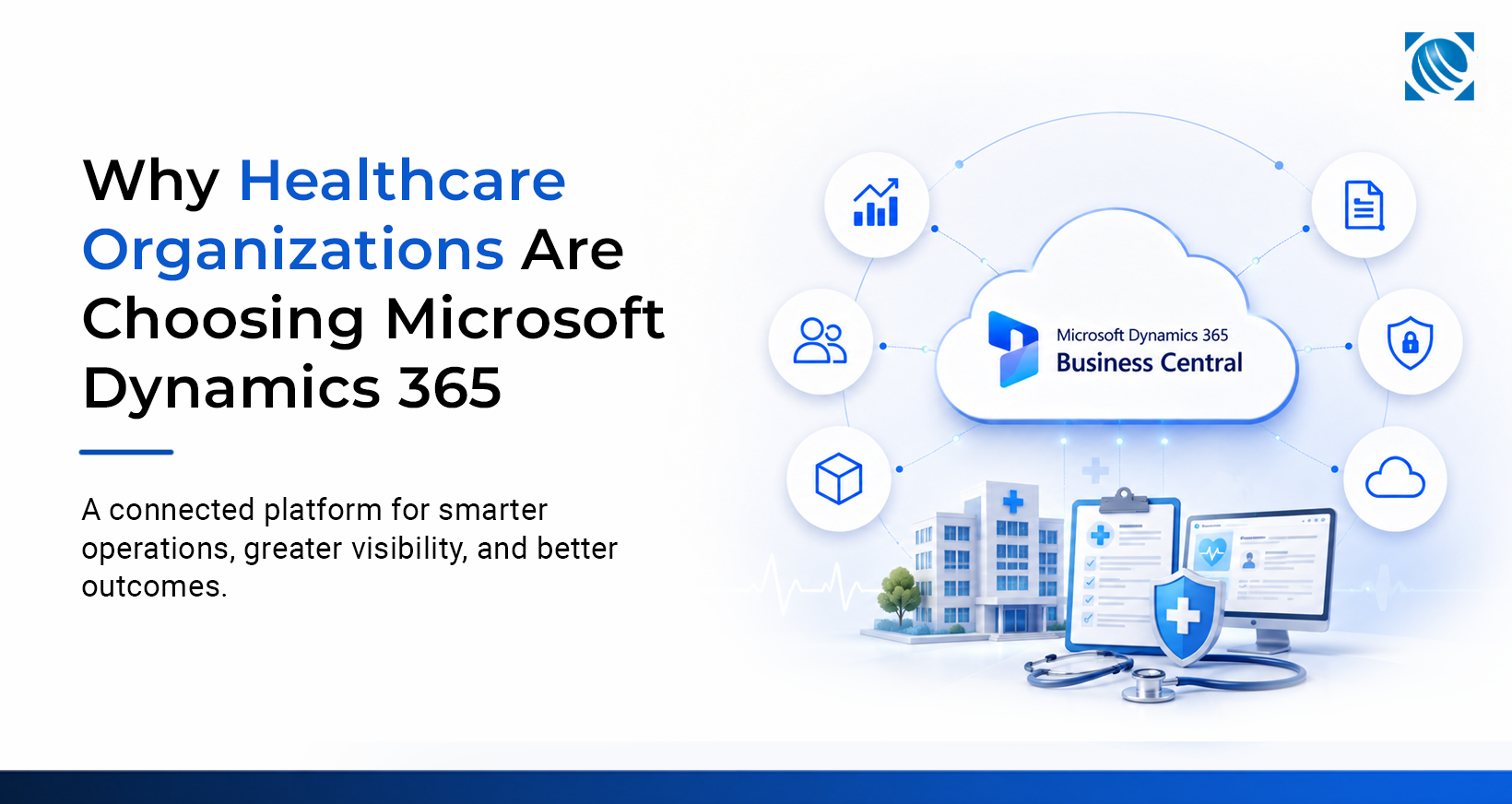
Microsoft Dynamics 365 Business Central has become an important part of that transformation. It provides healthcare organizations with a single platform to manage core business operations while integrating with the broader Microsoft ecosystem. Combined with tools like Microsoft 365, Power Platform, Azure, and AI capabilities, it creates a connected operational foundation that supports better decision-making and long-term growth.
The Challenges Facing Modern Healthcare Organizations
Healthcare is one of the most complex industries to operate in. Every decision affects patient care, regulatory compliance, operational efficiency, and financial performance. As organizations grow, that complexity increases.
One of the biggest challenges is the lack of connected information. Critical business data is often spread across multiple applications, making it difficult for leadership teams to access real-time insights. Finance, procurement, operations, and inventory teams may each have their own reports, but bringing everything together into a single, reliable view often requires significant manual effort.
Managing inventory has become equally challenging. Hospitals and healthcare providers handle thousands of medical supplies, pharmaceuticals, consumables, and equipment every day. Without accurate, real-time visibility, organizations risk stock shortages, excess inventory, expired supplies, and unnecessary procurement costs.
Regulatory compliance continues to demand attention as well. Healthcare organizations must maintain detailed records, protect sensitive patient and operational data, and comply with evolving standards across finance, security, and governance. Manual processes increase the risk of errors and make compliance more difficult to manage.
Many healthcare providers are also expanding beyond a single location. Managing multiple hospitals, clinics, laboratories, or specialty centers requires standardized processes, centralized financial reporting, and consistent operational visibility across every facility. Without an integrated business platform, maintaining that consistency becomes increasingly difficult.
These challenges aren’t unique to large hospital networks. Mid-sized healthcare organizations face many of the same issues as they scale their operations. The difference is that today’s technology makes it possible to address these problems through connected business systems instead of adding more standalone applications.
The organizations that are investing in integrated platforms today are putting themselves in a stronger position to improve operational efficiency, respond faster to changing business needs, and continue delivering high-quality care as they grow.
Why Healthcare Organizations Need a Connected ERP
For many healthcare organizations, growth happens gradually. A new clinic opens. Another hospital is acquired. Additional services are introduced. Over time, different departments adopt systems that solve immediate needs, but rarely connect with one another.
The result is a technology landscape made up of finance software, inventory applications, procurement tools, HR systems, spreadsheets, and reporting solutions that operate independently. Each system serves a purpose, but together they create information silos that slow down everyday operations.
This fragmentation affects almost every department.
Finance teams spend valuable time reconciling data from multiple systems before they can close monthly accounts. Procurement teams struggle to track purchasing across locations. Inventory managers often lack real-time visibility into stock levels, making it difficult to avoid shortages or excess inventory. Leadership teams wait days, sometimes weeks, for consolidated reports that should be available instantly.
As healthcare organizations expand, these inefficiencies become more expensive and harder to manage.
A connected ERP changes that.
Instead of operating through isolated systems, organizations manage their core business functions through a single platform where information flows automatically between departments. Finance, procurement, inventory, operations, projects, and reporting all work from the same source of truth.
This doesn’t mean replacing every clinical application already in use. Electronic Health Records (EHR), Hospital Information Systems (HIS), Laboratory Information Systems (LIS), and other specialized healthcare applications continue to play their role. A modern ERP complements these systems by managing the operational and financial side of the business while integrating with existing clinical platforms.
The result is better coordination across the organization, fewer manual processes, and faster access to reliable information.
Why Microsoft Dynamics 365 Business Central?
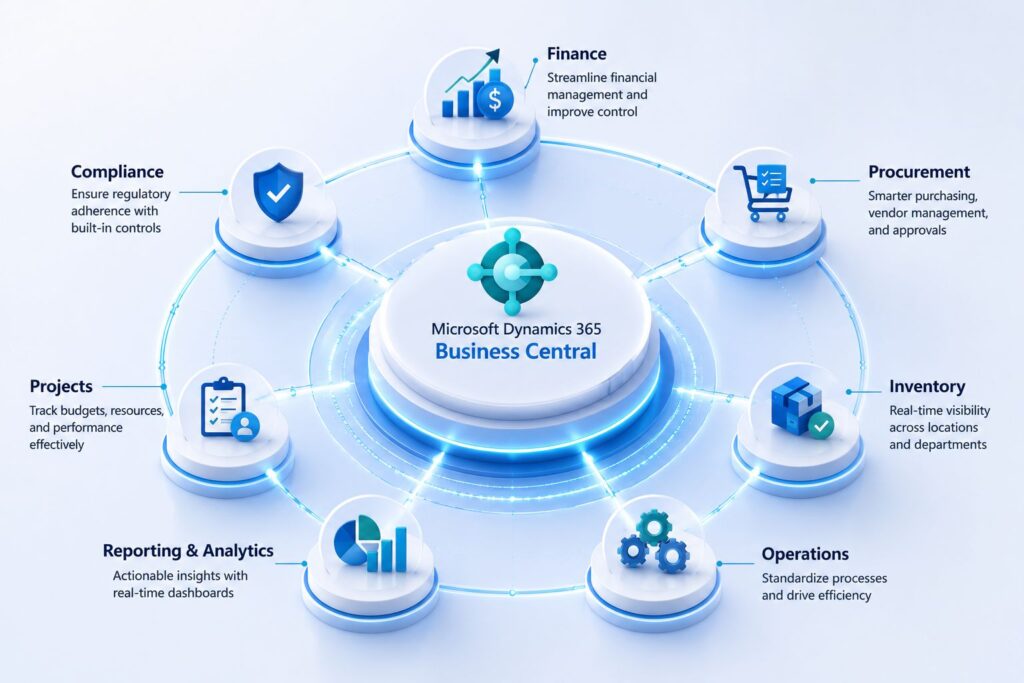
Microsoft Dynamics 365 Business Central is designed for organizations that need more than accounting software but don’t want the complexity of large-scale ERP implementations.
It brings together finance, procurement, inventory, supply chain, project management, reporting, and business operations into one cloud-based platform that’s easy to scale as the organization grows.
For healthcare providers, Business Central becomes the operational backbone that connects administrative processes across departments and locations.
Some of the areas where it creates immediate value include:
Unified Financial Management
Manage general ledger, accounts payable, accounts receivable, budgeting, cash flow, and financial reporting from a single system. Finance teams gain better visibility while reducing manual reconciliation and duplicate data entry.
Smarter Procurement
Automate purchasing, approvals, vendor management, and replenishment processes. Procurement teams can monitor supplier performance, track purchase orders, and maintain better control over spending.
Intelligent Inventory Management
Track medical supplies, pharmaceuticals, consumables, and equipment in real time across multiple facilities. Automated inventory planning helps reduce shortages, prevent overstocking, and minimize waste.
Multi-location Operations
Whether managing hospitals, clinics, laboratories, or diagnostic centers, Business Central provides centralized visibility while allowing each location to operate efficiently within standardized processes.
Real-Time Reporting
Executives no longer need to wait for manually prepared reports. Interactive dashboards and live operational data make it easier to monitor financial performance, inventory levels, procurement activities, and organizational health.
Built for Growth
Healthcare organizations evolve continuously. New facilities, services, business units, and regulatory requirements can be accommodated without rebuilding core business systems.
More Than an ERP
One of the biggest advantages of Microsoft Dynamics 365 Business Central is that it doesn’t operate in isolation.
It fits naturally within the Microsoft ecosystem, allowing healthcare organizations to extend its capabilities without introducing unnecessary complexity.
Teams can collaborate through Microsoft Teams, manage documents in SharePoint, analyze data with Power BI, automate repetitive tasks using Power Automate, and securely host workloads on Azure. Information flows between these applications, reducing manual effort and giving employees a more connected way to work.
This integration also creates a strong foundation for introducing AI into everyday business operations. With connected data and standardized processes already in place, healthcare organizations are better positioned to use AI for forecasting, reporting, document processing, and operational insights.
Instead of adding another standalone application, Business Central becomes the platform that connects people, processes, and information across the organization.
How Business Central Improves Day-to-Day Healthcare Operations
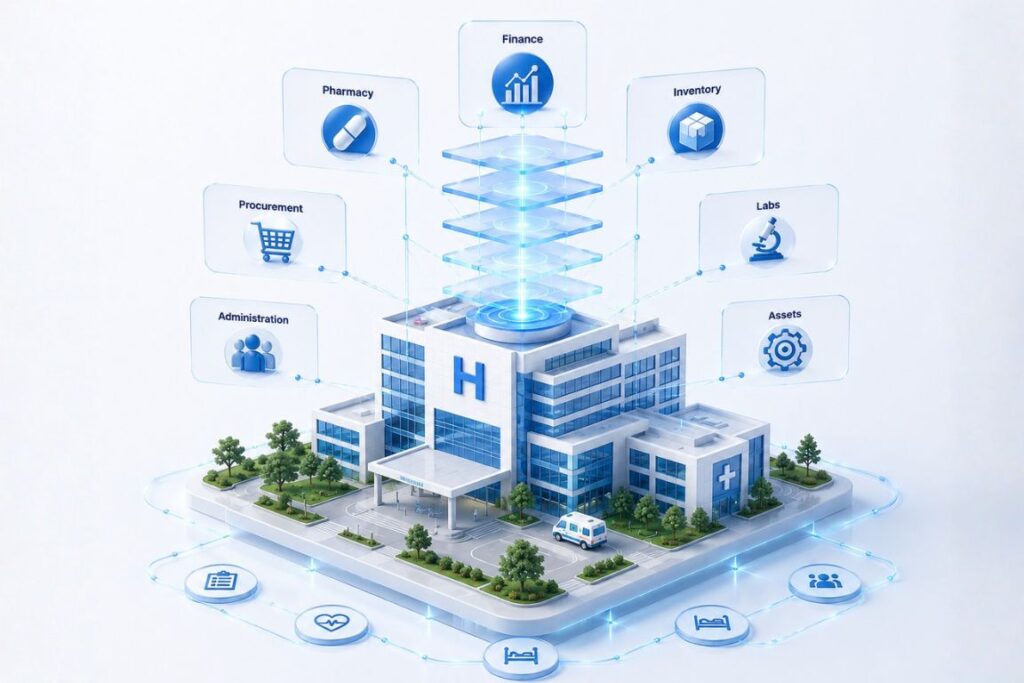
Every healthcare organization shares one common objective: deliver better patient care while running efficient, financially sustainable operations.
That requires every business function to work together. Finance, procurement, inventory, administration, and operations all play an important role in keeping healthcare services running smoothly.
Microsoft Dynamics 365 Business Central helps connect these functions on a single platform, giving healthcare providers better visibility, stronger control, and the ability to make faster decisions.
Financial Management with Complete Visibility
Healthcare organizations deal with complex financial processes every day. Managing vendor payments, insurance reimbursements, departmental budgets, operating expenses, and capital investments requires accurate and timely financial information.
When financial data is spread across multiple systems, preparing reports becomes time-consuming and decision-making slows down.
Business Central brings financial operations together in one place.
Finance teams can manage accounts payable, receivables, budgeting, cash flow, fixed assets, and financial reporting from a unified platform. Executives gain access to real-time financial dashboards instead of relying on manually prepared reports at the end of each month.
With better visibility into costs and revenue, organizations can identify opportunities to improve efficiency while maintaining high standards of patient care.
Smarter Procurement and Vendor Management
Hospitals and healthcare facilities depend on hundreds of suppliers for medicines, medical equipment, consumables, and operational supplies.
Managing these relationships manually often leads to delayed approvals, duplicate purchases, and inconsistent pricing.
Business Central simplifies procurement by creating standardized purchasing workflows.
Purchase requests, approvals, vendor records, contracts, and invoices can all be managed through one connected system. Procurement teams gain better visibility into supplier performance, purchasing trends, and overall spending.
Automated workflows also reduce administrative effort, allowing procurement teams to focus on strategic sourcing rather than repetitive manual tasks.
Better Inventory Control
Medical inventory is one of the most critical areas of healthcare operations.
Running out of essential supplies can directly affect patient care, while overstocking ties up valuable capital and increases the risk of expired inventory.
Business Central provides real-time visibility into inventory across departments and locations.
Healthcare organizations can monitor stock levels, automate replenishment, manage warehouse operations, and track inventory movement from procurement to consumption.
This helps ensure that the right supplies are available when needed while reducing unnecessary inventory costs.
Managing Multiple Healthcare Facilities
As healthcare organizations expand, maintaining consistency across locations becomes increasingly difficult.
Each hospital, clinic, laboratory, or diagnostic center may have different operational processes, reporting practices, and financial controls.
Business Central provides a centralized platform while allowing individual locations to operate independently where required.
Leadership teams gain consolidated reporting across the organization, while local teams continue managing their day-to-day operations efficiently.
This creates greater operational consistency without sacrificing flexibility.
Compliance and Audit Readiness
Healthcare organizations operate in one of the most highly regulated industries.
Financial records, procurement activities, operational processes, and sensitive business information must all be managed with transparency and accountability.
Business Central helps strengthen governance through role-based access, approval workflows, detailed audit trails, and secure data management.
Instead of relying on manual documentation, organizations have a clear record of transactions and approvals, making audits and compliance reporting significantly easier.
Data That Supports Better Decisions
One of the biggest advantages of an integrated business platform is access to reliable information.
Instead of collecting reports from multiple departments, leadership teams can monitor operational performance through live dashboards and interactive reports.
Questions that once took days to answer can now be addressed in minutes.
For example:
- Which facilities have the highest procurement costs?
- Which suppliers consistently deliver late?
- Are inventory levels increasing faster than patient demand?
- Which departments are exceeding their budgets?
- Where can operational efficiencies be improved?
Having timely answers enables healthcare leaders to make informed decisions based on current business conditions rather than historical reports.
Building a Foundation for Future Growth
Technology investments should support long-term business goals, not just immediate operational needs.
Business Central is designed to grow alongside the organization.
Whether expanding into new locations, adding new healthcare services, integrating additional systems, or supporting higher transaction volumes, the platform provides the flexibility to adapt without requiring organizations to replace their core business systems.
This makes it a practical choice for healthcare providers looking to build a stable operational foundation while preparing for future innovation.
A Platform That Connects the Entire Organization
Perhaps the biggest benefit of Business Central is not any single feature. It’s the way it connects people, processes, and information across the organization.
Finance teams no longer work in isolation.
Procurement has visibility into inventory.
Operations can access financial information.
Leadership has a unified view of business performance.
When everyone works from the same data, collaboration improves, decisions happen faster, and the organization is better equipped to deliver consistent, high-quality healthcare services.
Extending Business Central with the Microsoft Ecosystem
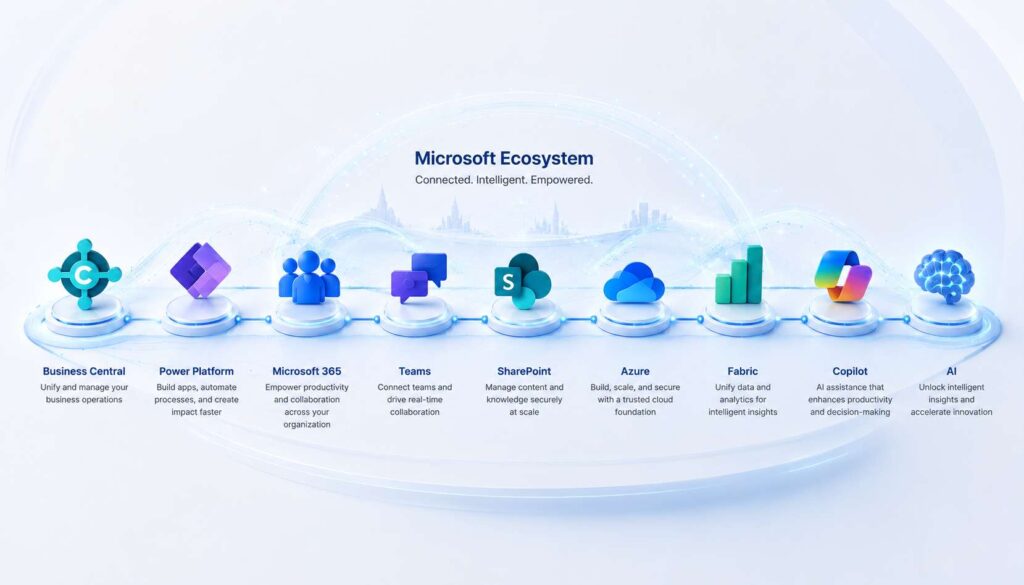
Business Central becomes even more valuable when it works alongside the rest of Microsoft’s business applications.
Healthcare organizations rarely rely on a single platform. Teams collaborate through Microsoft Teams, manage documents in SharePoint, analyze performance using Power BI, automate workflows with Power Automate, and increasingly use AI to simplify routine tasks.
When these technologies are connected, information moves seamlessly across departments. Employees spend less time switching between systems and more time focusing on work that adds value.
For example, a procurement approval can be initiated in Business Central, routed automatically through Power Automate, reviewed in Microsoft Teams, and stored securely in SharePoint. Executives can then monitor procurement performance through live Power BI dashboards without waiting for manual reports.
This connected experience reduces administrative effort while improving visibility across the organization.
Bringing AI into Healthcare Operations
Artificial Intelligence is changing how healthcare organizations operate, but its biggest impact isn’t limited to clinical care.
Much of the opportunity lies in improving everyday business operations.
Healthcare teams spend countless hours processing invoices, reviewing reports, searching for documents, responding to internal requests, and preparing operational updates. These tasks are essential, but they take valuable time away from higher-value work.
AI helps simplify many of these activities.
With Microsoft Copilot and Azure AI capabilities, organizations can summarize financial reports, generate operational insights, analyze spending patterns, search enterprise knowledge, and automate repetitive administrative processes using natural language.
Imagine a finance manager asking,
“Show me departments where procurement costs increased this quarter.”
Or an operations leader requesting,
“Summarize inventory exceptions across all facilities.”
Instead of manually compiling reports, AI retrieves relevant information and presents actionable insights in seconds.
The result is faster decision-making and more time for teams to focus on strategic initiatives.
Turning Data into Better Decisions
Every healthcare organization generates enormous amounts of operational data.
Financial transactions.
Procurement records.
Inventory movement.
Vendor performance.
Project costs.
Resource utilization.
The challenge isn’t collecting this information. It’s making sense of it.
Business Central, combined with Microsoft Fabric and Power BI, gives organizations a unified view of their operational data.
Interactive dashboards allow leadership teams to monitor key performance indicators, identify trends, compare facility performance, and respond quickly when issues arise.
Instead of relying on historical reports, decisions are based on current business conditions.
That level of visibility becomes increasingly valuable as organizations expand across multiple locations.
Why Choosing the Right Implementation Partner Matters
Technology is only one part of a successful transformation.
The way it’s implemented determines the value organizations ultimately receive.
Every healthcare provider has unique operational processes, regulatory requirements, reporting needs, and existing technology investments. A successful implementation must fit those realities rather than forcing organizations to adapt to generic software processes.
This requires deep expertise across Microsoft technologies, healthcare operations, data integration, and change management.
At Octaware, we help healthcare organizations plan, implement, customize, and optimize Microsoft business solutions based on their specific business objectives.
Our expertise spans:
- Microsoft Dynamics 365 Business Central
- Dynamics 365 Customer Engagement
- Microsoft Azure
- Microsoft 365
- Power Platform
- Microsoft Fabric
- AI and Automation
- Integration & Modernization Services
- Application Support and Managed Services
Rather than treating ERP as a standalone project, we help organizations build connected business ecosystems that support long-term operational growth.
Conclusion
Healthcare organizations are under constant pressure to improve efficiency while continuing to deliver exceptional patient care.
Disconnected systems, manual processes, and limited operational visibility make that challenge even greater.
Microsoft Dynamics 365 Business Central provides a strong operational foundation by connecting finance, procurement, inventory, reporting, and business operations on a single platform. When combined with Microsoft’s broader ecosystem, including Azure, Power Platform, Microsoft 365, Fabric, and AI capabilities, it enables healthcare organizations to work smarter, respond faster, and make more informed decisions.
The goal isn’t simply to implement a new ERP system.
It’s to create an organization where people, processes, and technology work together to support better business outcomes.
As healthcare continues to evolve, organizations with connected, data-driven operations will be better positioned to adapt, grow, and deliver exceptional care.
Ready to Modernize Your Healthcare Operations?
Whether you’re planning an ERP implementation, modernizing legacy systems, or exploring AI-powered business solutions, Octaware can help you build a connected healthcare ecosystem that supports today’s needs and tomorrow’s growth.