
Why growing businesses are replacing disconnected systems with one connected operational platform.
Every growing business reaches a point where the systems that once supported its expansion begin to slow it down.
Finance runs on one application, inventory lives in another, reporting depends on spreadsheets, and leadership struggles to see the business clearly. Expansion isn’t the problem anymore. Operational complexity is.
As businesses grow, leaders are increasingly looking for technology that connects finance, operations, sales, and reporting while reducing manual work. Modern cloud ERP platforms, combined with AI and automation, are helping organizations simplify day-to-day operations without adding unnecessary complexity.
Where the Complexity Comes From
In the early days, spreadsheets, standalone accounting software, and email approvals work fine. But as transaction volumes rise and teams multiply, those same habits become the bottleneck: finance spends days consolidating reports, sales can’t confirm stock in real time, and procurement duplicates orders because nobody shares a view of vendors.
Most SMBs respond by bolting on yet another application per department. It rarely helps — it just adds a silo. You’ll recognize the pattern if:
- Financial reports take days to consolidate
- Inventory is tracked across separate spreadsheets
- Sales, finance, and operations all see different numbers
- Approvals live in email chains, not a workflow
- Leadership has no real-time view of performance
None of this means the business is failing. It means the systems haven’t kept pace with it — which is exactly the gap an ERP for SMB teams is designed to close.
Why Microsoft Dynamics 365 Business Central
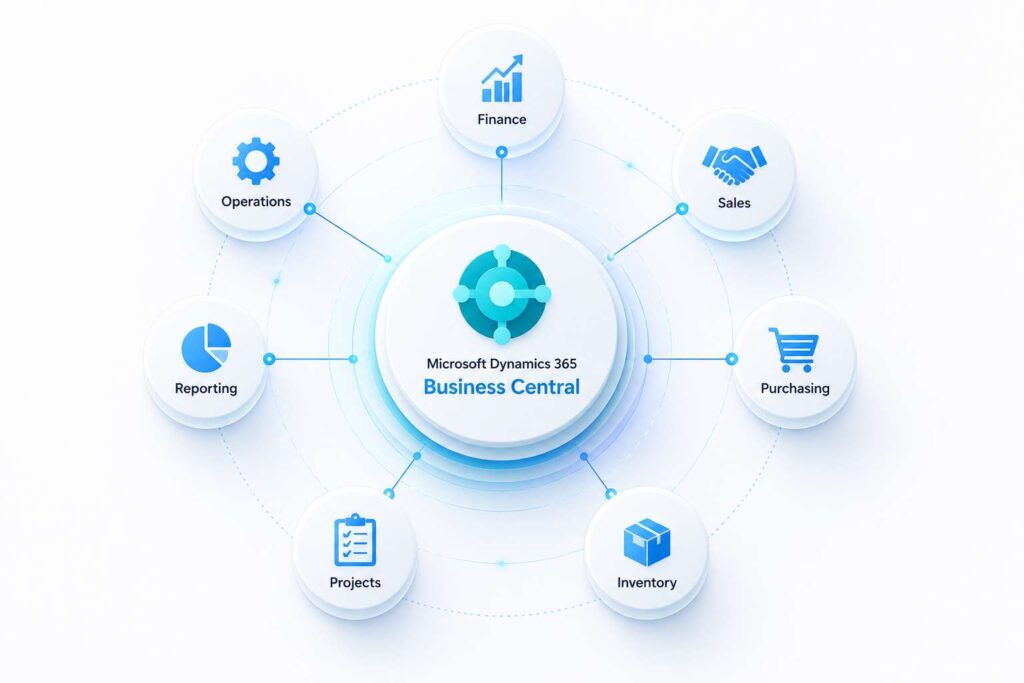
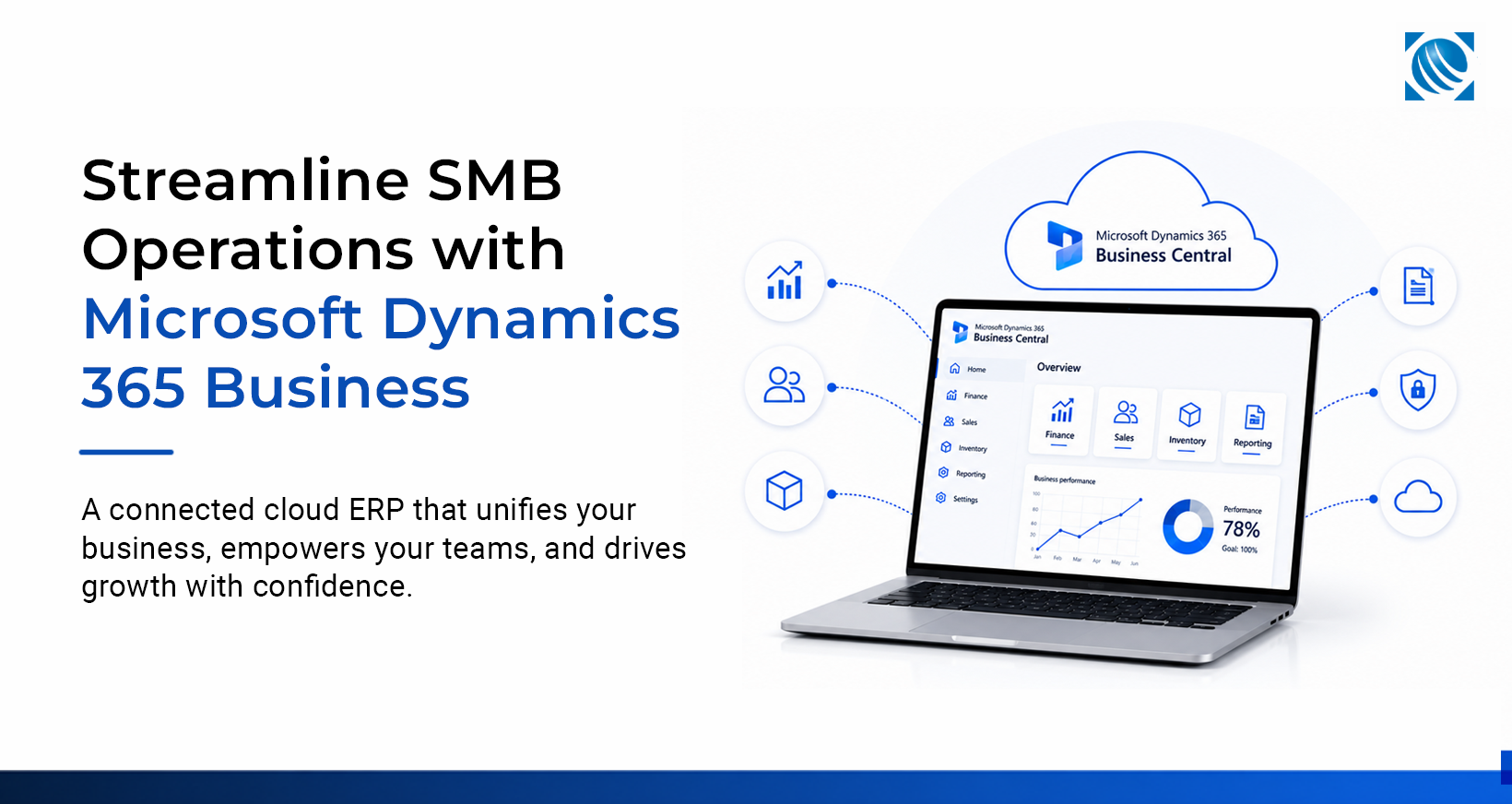
The platform is built for organizations that have outgrown basic accounting software but don’t want the cost or complexity of a traditional enterprise ERP. It unifies finance, sales, purchasing, inventory, projects, and reporting into a single cloud platform, so every department works from the same real-time data.
It’s also built to extend — connecting naturally with Microsoft 365, Power Platform, Azure, Microsoft Fabric, and Copilot. That combination has made it one of the most widely adopted ERP software choices among growing companies. It fits naturally across retail, distribution, professional services, manufacturing, healthcare, and construction — anywhere disconnected systems are slowing decisions down.
How Business Central Simplifies Everyday Operations
Every business function contributes to the whole. When finance, sales, procurement, and inventory operate in isolation, teams spend more time chasing information than making decisions. The platform connects those functions into a single system, so information flows and decisions happen faster.
Finance that goes beyond bookkeeping
Month-end used to mean days of reconciling numbers across systems. The ERP brings the general ledger, payables, receivables, budgeting, and cash flow together in one place, so close happens in hours, and every number traces back to its source. A finance manager preparing a quarterly review can ask Copilot to summarize cash flow trends, flag overdue receivables, or spot unusual spending — without opening a single spreadsheet.
Smarter sales and service
Reps get one view of customers, pricing, inventory, and order status — so quotes go out faster, and delivery promises are ones the business can keep.
Procurement that keeps pace
Requests, approvals, and supplier management run through one workflow, cutting duplicate orders and giving finance visibility into spend before it happens.
Inventory you can actually trust
Real-time visibility across warehouses means stock levels reflect what’s really on the shelf, not what a spreadsheet said last week. Picture a distributor with stock spread across three warehouses when an urgent order comes in. Without a connected system, confirming availability means phone calls and manual checks. With one shared platform, sales and operations see the same live data and confirm the order in minutes.
Projects and production, one roof
Project teams track budgets, resourcing, and profitability on the same platform that runs finance, and manufacturers get production planning and capacity visibility without a bolt-on system — useful even for businesses that don’t run a full factory floor.
Reporting leadership can act on
Instead of static reports built once a month, dashboards update as transactions happen. Paired with Power BI and Microsoft Fabric, leaders explore profitability, inventory, and sales performance interactively, asking new questions instead of waiting for someone to build the next report.
Imagine this
A sales team receives a large customer order. Inventory is spread across three warehouses. Finance needs to approve a special discount. Procurement has to replenish stock. Management wants to understand the order’s profitability before it’s confirmed. Without an integrated ERP, each of those teams works from its own version of the truth, and the order stalls while people chase answers. With one connected platform, every department sees the same information in real time, so the business processes the order faster and with far more confidence.
“The real value of an ERP isn’t that it manages business processes. It’s that it connects them.“
More Than an ERP: The Power of the Microsoft Ecosystem
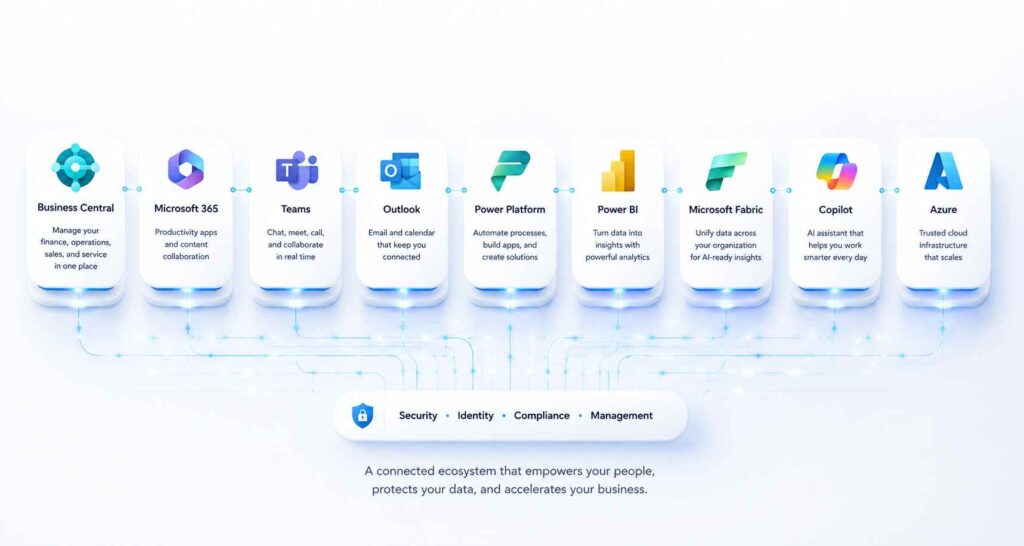
The platform rarely operates alone. Employees already collaborate in Teams, store documents in SharePoint, and analyze data in Excel — and it plugs directly into that existing workflow instead of adding another login to remember. A sales order needing approval can trigger a Power Automate workflow automatically, notify the right stakeholders in Teams, file supporting documents in SharePoint, and update a live Power BI dashboard, without anyone touching a spreadsheet.
Because these applications are designed to work together, employees spend less time switching between systems and more time acting on information. The result isn’t just better productivity. It’s faster decision-making across the business.
Microsoft Fabric extends this connected experience further, bringing operational and analytical data together on a unified platform, so enterprise reporting stays simpler and more consistent as the business scales.BusinessCentralFinanceOperationsInventoryCustomersMicrosoft365PowerPlatformAI
core business functions above · connected Microsoft ecosystem below
What’s Next: AI Agents in Business Applications
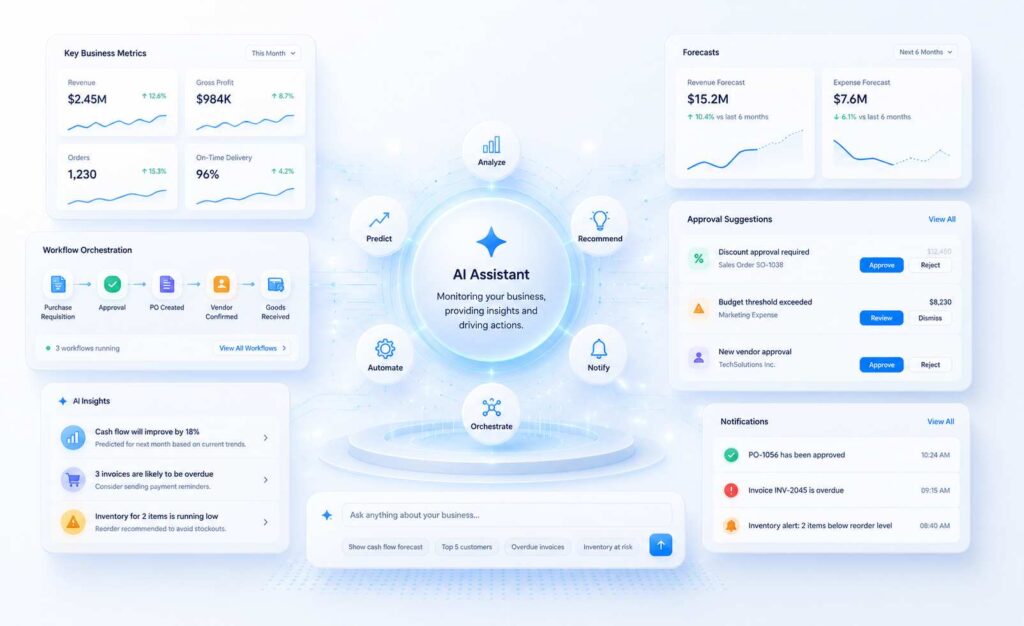
Business software is moving beyond automation. AI agents are starting to monitor processes, flag exceptions, and complete routine tasks with minimal human input, and Microsoft is rolling these capabilities out steadily across the Dynamics 365 ecosystem. Imagine an agent monitoring overdue invoices, identifying unusual purchasing patterns, or notifying a manager when inventory falls below a set threshold. Instead of waiting for someone to discover the issue, the system surfaces it proactively, so teams respond before it becomes a problem. For SMBs, that means a platform that doesn’t just store information, but actively helps teams make faster, better-informed decisions.
Why Business Central Fits Naturally into the Microsoft Ecosystem
Employees are already comfortable with Outlook, Excel, and Teams, which shortens the learning curve. The platform is cloud-first, giving secure access from anywhere without the overhead of on-premises infrastructure. It’s backed by Microsoft’s continued investment in identity, security, and compliance. And regular updates bring new AI and workflow capabilities without forcing disruptive upgrades.
Why Partner with Octaware
Every implementation is different. Some organizations are replacing legacy accounting software; others are consolidating several disconnected applications into a single platform. Our role is to understand those business processes first, then design an implementation that supports how the organization actually operates — not the other way around. From your first legacy-system migration to your fiftieth process improvement, we stay on as a long-term partner, not a vendor that disappears after go-live.
Conclusion
Growth shouldn’t require more spreadsheets, more manual work, or more disconnected systems.
It should give your teams better visibility, better collaboration, and greater confidence in every business decision.
Microsoft Dynamics 365 Business Central provides that operational foundation. Octaware helps you build on it.
Ready to schedule a Business Central consultation?
Whether you’re evaluating your first ERP or looking to get more value from your Microsoft investment, let’s start a conversation about your next phase of growth. Schedule a Business Central Consultation →